On MMORPGs
2026-09-06
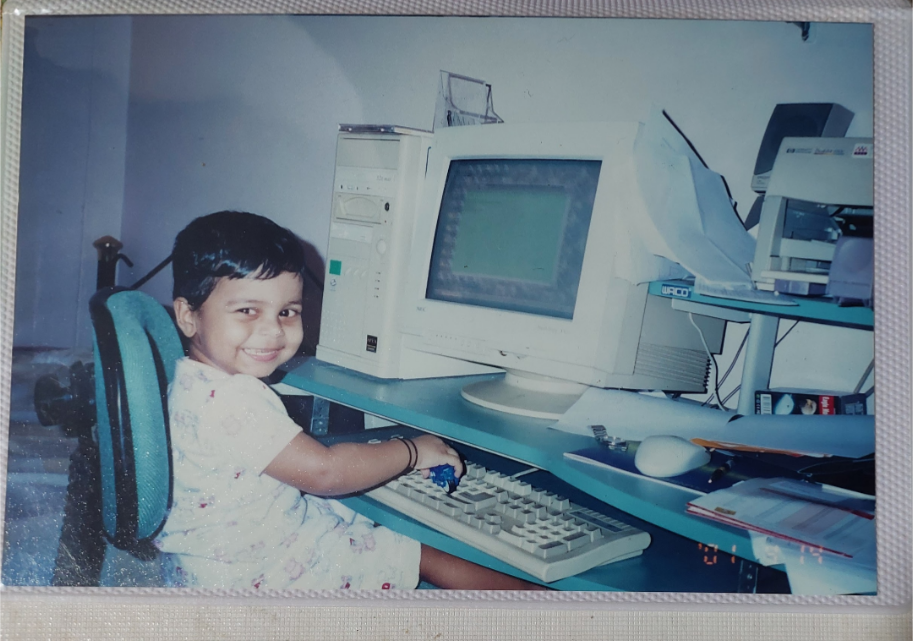
I signed up for Club Penguin on November 6th, 2006, almost twenty years ago. 2006 is not early at all in the chronology of MMORPGs, well past the initial wave of more difficult titles like Everquest and FFXI, but still well within the era of the internet being a place of its own. It was still something you had to log in to from a desktop computer situated in the ‘computer room’ of your home. I hated this as a child, and a few years later I would come to desperately want a laptop after seeing a character on Zoey 101 use the built-in CD drive in his to watch movies in bed. The freedom that came with unrestricted access to the internet from any room in the house was very teenage and very cool to prepubescent me.
Logging into Club Penguin and knowing that the thousands of penguins around you were all humans was digital crack to a child. Children are very good at creating playspaces out of nothing, much like the Spongebob episode about using your imagination to play in a cardboard box. Children are good at floating aimlessly in swimming pools, pretending to be fatally wounded soldiers. Children like fort wars and spy missions at the playground sand pit. Anyone who has played an MMORPG knows how incredible a virtual world must be to children who have only known swimming pools and sand pits. I genuinely think letting a child play an MMORPG is one of the greatest formative experiences you can give him despite the risk of him growing up to become a penniless NEET.
There was friction in old MMORPGs, but all of that came from nerds wondering how to create a true-to-life fantasy world in a videogame and not suits designing to maximise player engagement. A true-to-life fantasy world sounds like an oxymoron, but fantasy worlds are composed of many things that exist in real life too, like boats. Older MMORPGs have boats that you have to wait for, that take several minutes to carry you to your destination, much like real life (albeit faster). Over time, we asked ourselves questions like ‘why would anyone want to wait to get to their destination in a videogame?’ Why would anyone want to walk to a dungeon entrance to enter it? ‘Why would I want to walk across this map when I could fly across it?’ Why would I want to fly to my destination when I should be able to just teleport there instantly? Each of these, in isolation, might have seemed like good quality-of-life improvements. But altogether they leave us with bland queue simulators that wear a thin fantasy skin to mask the fact that they have devolved into skinner boxes that you can operate solo without ever stopping to talk to another player.
 2007 Halloween event in Club Penguin.
I think this stems from the freedom to access the internet anywhere, anytime, which has been a terrible thing, especially for MMORPGs, and much like the genie and his bottle, you cannot force the internet back into the computer room it came from. What was enchanting about Narnia lay in the fact that it was separated from the world, accessible only through a dusty cupboard. The internet has lost its cupboard, and now it is filled with people who would never have bothered with the effort of finding and stepping through the cupboard to begin with. These are also the same people who would never have bothered waiting five minutes for a boat or spending half an hour making the trek from one capital city to the next. With this massive shift in demographic comes a massive shift in MMORPG world design in its wake.
2007 Halloween event in Club Penguin.
I think this stems from the freedom to access the internet anywhere, anytime, which has been a terrible thing, especially for MMORPGs, and much like the genie and his bottle, you cannot force the internet back into the computer room it came from. What was enchanting about Narnia lay in the fact that it was separated from the world, accessible only through a dusty cupboard. The internet has lost its cupboard, and now it is filled with people who would never have bothered with the effort of finding and stepping through the cupboard to begin with. These are also the same people who would never have bothered waiting five minutes for a boat or spending half an hour making the trek from one capital city to the next. With this massive shift in demographic comes a massive shift in MMORPG world design in its wake.
Why did people even find the janky online worlds of the past so fascinating? After all, there were people who played MMORPGs but did not bother with Dungeons and Dragons, LARPing and other such immersive hobbies (though there was certainly great overlap between all three). What differentiates MMORPGs from the others is that they were online to begin with. The internet itself was the universe to step into. The internet was not something any three-year-old could navigate on their parents’ iPad to watch toy reviews, and now that it is, it has lost much of its authoritative aura, making it very uncool.
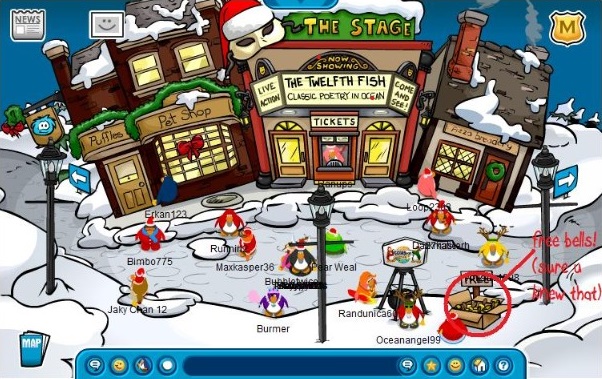 2007 Christmas event in Club Penguin.
The virtual worlds located within it have not necessarily become ‘uncool’ by association, but there is no longer anything inherently cool about them, not when internet access is ubiquitous, not when everyone uses the same three social media apps with no custom CSS allowed whatsoever. In the now uncool internet, games where you have to wait five minutes for a boat are seen as time-wasters. Why would I want to spend more time on the internet than I have to? And so every rough edge gets sanded down until you are left with the most bouba of games imaginable, Final Fantasy XIV (amongst other such boubafied MMORPGs).
2007 Christmas event in Club Penguin.
The virtual worlds located within it have not necessarily become ‘uncool’ by association, but there is no longer anything inherently cool about them, not when internet access is ubiquitous, not when everyone uses the same three social media apps with no custom CSS allowed whatsoever. In the now uncool internet, games where you have to wait five minutes for a boat are seen as time-wasters. Why would I want to spend more time on the internet than I have to? And so every rough edge gets sanded down until you are left with the most bouba of games imaginable, Final Fantasy XIV (amongst other such boubafied MMORPGs).
The inevitable fate for MMORPGs, a genre that relies on giving an entire playerbase a shared virtual world to live in, is that it must be appealing to hundreds of thousands, if not millions. As the demographic of the pool it pulls from shifts, so does its design, for no company would ever agree to design a game that appeals to fewer people rather than more. And when the pool becomes crowded with people who were never interested in living a virtual life to begin with, MMORPGs adapt accordingly, keeping but deprecating their massive worlds like drooping vestigial organs begging to be cut off, all while removing the need for socialisation, for travel, for adventure, for everything that makes the hero’s journey worth reading.
(I do realise that Club Penguin has very little friction and forced socialisation, but I don't have any other interesting pictures of old MMORPGs to share... We did have teenagers forming roleplay armies and mafias to throw snowballs at each other in uniform and spam chat until one side got bored and left. I unfortunately don't have any pictures of that.)